 English
 Français
 Deutsch
 Italiano
 Português
 Español
 العربية

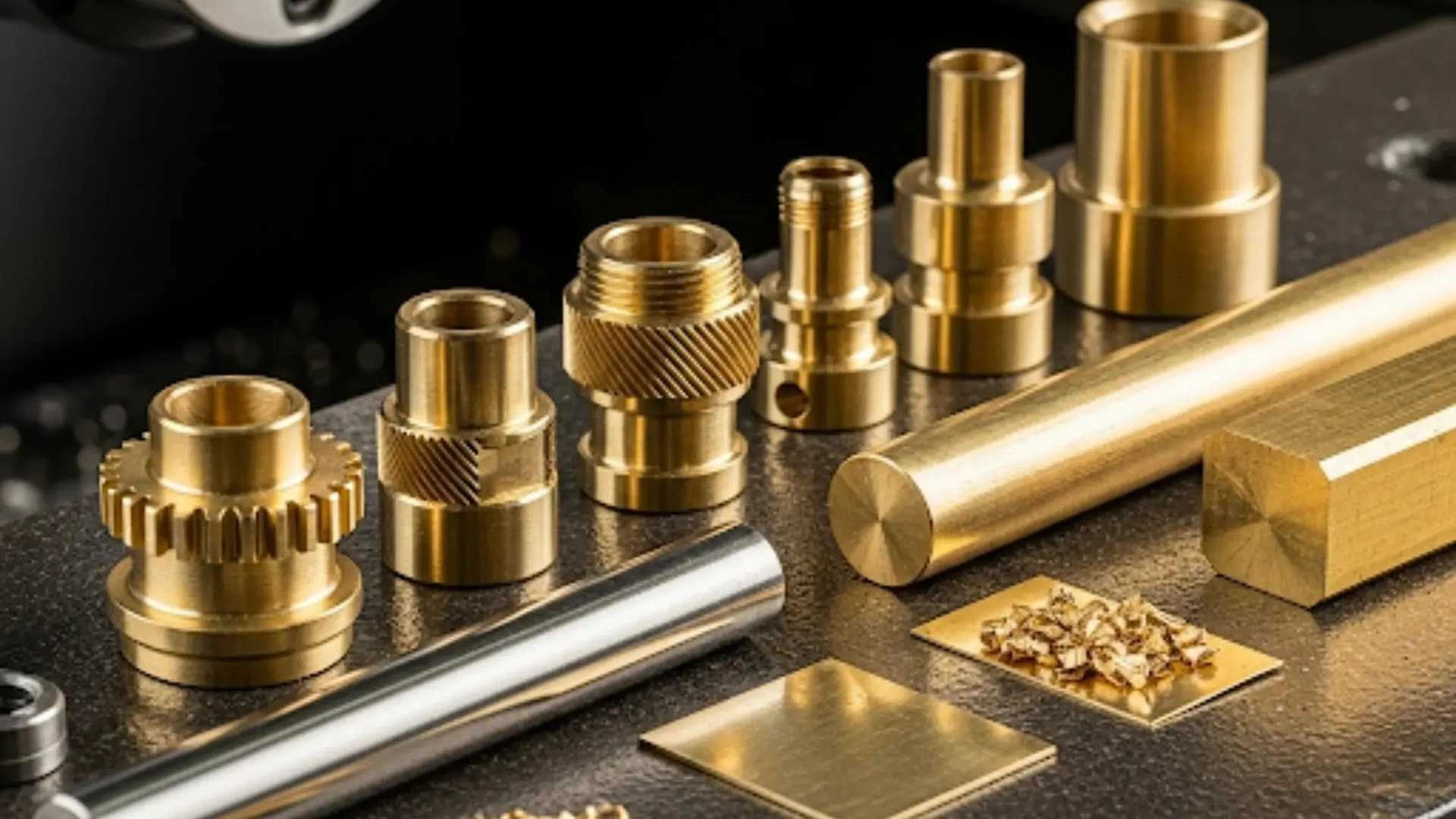
Brass CNC turned parts are made from brass using computer-controlled machining. Generally, this process involves subtractive manufacturing processes. These are CNC turning, milling, and drilling. And popular grades include C360 Free Machining Brass for better machining. Similarly, C464 Naval Brass gives superior corrosion resistance.
Why Choose Brass for CNC Turning?
Brass performs very well in CNC turning because it is very good in machinability. This material forms chips well. So, it allows for faster cutting and feeding. This cuts down on cycle times. It also keeps surfaces smooth.
Brass resists corrosion well. This makes it perfect for plumbing & HVAC brass fittings and marine uses. Naval Brass C46400 has extra tin and nickel. This makes it even better against seawater. This is key for parts in tough places.
Brass conducts electricity well. This makes it ideal for electronics brass terminals and brass electrical part. Plus, brass naturally fights microbes. This makes it good for medical brass turned parts. Hygiene is very important there.
Understanding Brass Alloys for CNC Turning

Common Brass Alloys Used in CNC Turning
The selection of brass alloy directly impacts machining performance and final part characteristics. C360 brass machining is the gold standard for free-cutting applications. It contains lead additives that improve chip formation and reduce tool wear.
C260 brass CNC turning involves cartridge brass. It offers excellent cold-working properties. This is commonly used for precision brass machining applications. It requires deep drawing or complex forming operations. This alloy provides good strength while maintaining reasonable machinability.
C22000 red brass contains higher copper content. It provides very good corrosion resistance and thermal conductivity. C22000 red brass is good for brass valve components and heat exchanger applications.
C28000 Muntz metal turning involves a 60-40 brass alloy. It offers good strength and corrosion resistance. This alloy is particularly suitable for high-stress applications and marine environments.
Brass Alloy Comparison
| Alloy | Cu (%) | Zn (%) | Lead (%) | Machinability |
|---|---|---|---|---|
| C36000 | ~61.5 | ~35.4 | ~3.0 | Excellent |
| C46400 | ~60 | ~39.2 | ~0.8 Sn | Good |
| C26000 | ~70 | ~30 | <0.07 | Fair |
| C22000 | ~90 | ~10 | <0.05 | Fair |
| C28000 | ~60 | ~40 | <0.07 | Moderate |
CNC Brass Turning Process
The CNC brass turning process begins with raw brass rods loaded into the lathe. Using cutting tools controlled by a computer program, the machine removes material to achieve the desired shape and dimensions with high precision.
Challenges in Brass CNC Turning
While brass is relatively easy to machine, challenges include tool wear, maintaining tight tolerances, and achieving consistent surface finishes across different brass grades.
Role of CNC Milling in Brass Machining
CNC milling complements brass turning by creating slots, threads, and complex geometries that cannot be achieved with lathes alone. Together, turning and milling ensure complete manufacturing flexibility.