 English
 Français
 Deutsch
 Italiano
 Português
 Español
 العربية

Introduction
Engineers often face one recurring issue: matching the CAD model exactly to the intended parts. Prototypes might look simple and easier to shape on screen. In fact, once production starts, problems tend to happen.
Manual lathe setups are inefficient, as these render tools wear unevenly, and parts end up slightly off from design. Even a small variation impacts the parts fit, which slows down projects and increases production expenses.
Besides these challenges, deadlines add even more pressure. A batch order might be needed quickly, but machines without automation often cause delays. Every adjustment takes time, and one late delivery can affect a whole project and customer trust. For industries like aerospace or automotive, missing tolerances or deadlines is never an option.
That’s where, CNC metal lathe comes to play. These are computerized controls and follow programmed instructions with precision. They accommodate a wide range of metals like aluminum, brass, copper, titanium, and steel to exact measurements, keeping the tight tolerances. CNC lathes can support prototypes or bulk orders quickly while keeping the quality the same every time.
This guide will walk you through what a metal lathe does, its benefits, industrial uses, and how you can source your project to a reliable manufacturing company.
What is a CNC Metal Lathe?

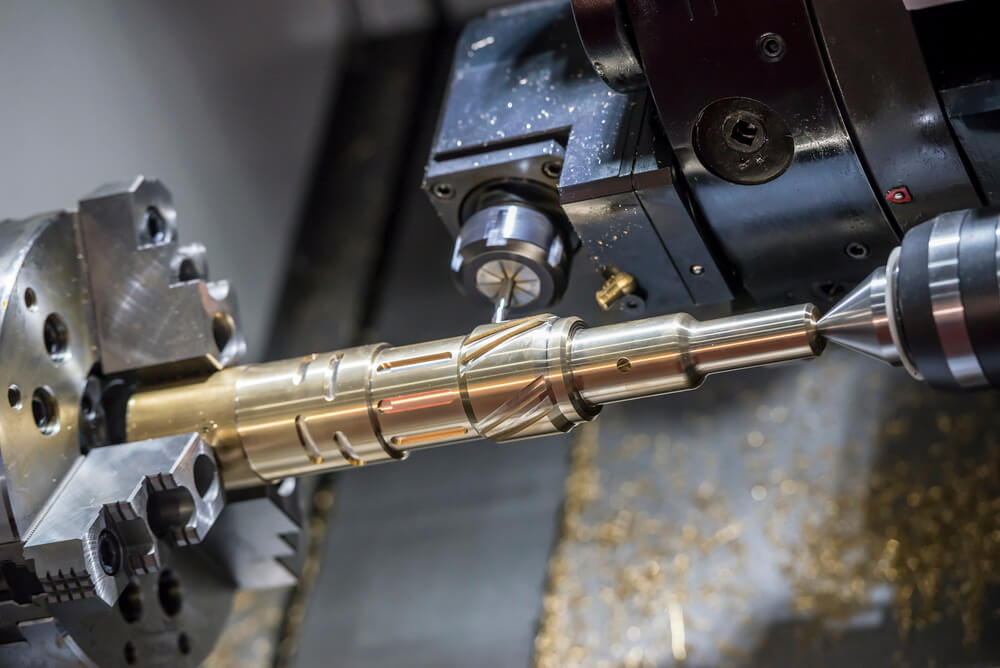
CNC metal lathe machining shapes metal parts to precision by following a programmed set of instructions. The machine regulates the spindle speed, feed rate, and the tool movement so every cut is made exactly according to the design.
To begin, a piece of metal is firmly clamped in the chuck. The spindle rotates the workpiece, and a cutting tool passes along and removes the material to achieve the final shape. You can make simple rods, tapered shafts, or more complex features such as threads, grooves, and holes. The machine is even capable of working undercuts and stepped diameters in a single configuration.
A CNC lathe saves time and minimizes errors when compared to manual turning. You can make one prototype or a large batch without altering the setup. Turning, cutting speed, cutting depth, and type of tool aid in getting uniform surface finishes and longer tool life. This process is crucial for automotive parts, aerospace components, and medical devices, where precision remains a major concern.
Advantages of CNC Metal Lathes in Custom Part Machining

A CNC metal lathe allows you to make parts the right size every time. It can handle simple jobs or complex shapes without compromising accuracy. You also get steady results, no matter how many parts you need, one or a larger batch.
Accurate dimensions, fine detail
A CNC metal lathe operates on a programmed design. This means it cuts the part to the exact size every single time. If you need a shaft, thread, or hole to be very precise, the lathe ensures that it meets the drawing.
Even very fine details, like smooth surfaces or minute grooves, can be created without error. This accuracy is extremely important for parts that need a precise fit for assembly.
Reliable results from prototype to batch operation
When the first prototype is made, the CNC lathe stores the program. The same program can then be used to manufacture 10 parts, or even 1000s, with consistent shapes. Moreover, you don’t need to be concerned about one part coming in a little off. This reliability saves time and prevents wastage. It helps engineers to confidently shift from the testing stage to the full production stage.
Increased speed of delivering complex parts
CNC lathes reduce the time required for setups. Instead of having a number of machines doing different steps, the lathe can do most of the work in one go. This helps to decrease delays and, therefore, allows you to receive parts faster. For example, a part that requires multiple grooves and threads can be completed in one setup. This allows for quicker delivery times, particularly with complicated designs for parts.
Flexibility over the type of material
The metal lathe can machine a range of materials. A CNC lathe is capable of soft metals such as aluminum or harder metals like stainless steel and titanium. By changing the speed, tool type, and feed rate, the machine can operate on varying materials without compromising quality.
Applications of CNC Metal Lathes in Engineering Projects
Aerospace Industry
CNC lathes produce light yet strong parts for aircraft. They are used for fasteners, bushings, and engine components that have to contend with stress and heat. Even small errors can create safety concerns.
Automotive Industry
In the car industry, shafts, axles, and gears are made with a CNC lathe. These parts are required to be strong enough to withstand daily wear. This process speeds up production, which is important in automotive work.
Medical Industry
CNC lathes are used to shape implants, screws, and surgical tools to detailed and inch precision. Uniform finishes are important to make parts work safely inside the body. Consistency ensures every medical part is found to have strict quality.
Industrial Tooling
Factories use CNC lathes to make cutting tools, holders, and machine parts. These tools are required to be durable and accurate to support production lines. Reliable machining reduces downtime and helps to keep processes moving efficiently.
Advantages of CNC Metal Lathes in Custom Part Machining
A CNC metal lathe allows you to make parts the right size every time. It can handle simple jobs or complex shapes without compromising accuracy. You also get steady results, no matter how many parts you need, one or a larger batch.
Accurate dimensions, fine detail
A CNC metal lathe operates on a programmed design. This means it cuts the part to the exact size every single time. If you need a shaft, thread, or hole to be very precise, the lathe ensures that it meets the drawing.
Even very fine details, like smooth surfaces or minute grooves, can be created without error. This accuracy is extremely important for parts that need a precise fit for assembly.
Reliable results from prototype to batch operation
When the first prototype is made, the CNC lathe stores the program. The same program can then be used to manufacture 10 parts, or even 1000s, with consistent shapes. Moreover, you don’t need to be concerned about one part coming in a little off. This reliability saves time and prevents wastage. It helps engineers to confidently shift from the testing stage to the full production stage.
Increased speed of delivering complex parts
CNC lathes reduce the time required for setups. Instead of having a number of machines doing different steps, the lathe can do most of the work in one go. This helps to decrease delays and, therefore, allows you to receive parts faster. For example, a part that requires multiple grooves and threads can be completed in one setup. This allows for quicker delivery times, particularly with complicated designs for parts.
Flexibility over the type of material
The metal lathe can machine a range of materials. A CNC lathe is capable of soft metals such as aluminum or harder metals like stainless steel and titanium. By changing the speed, tool type, and feed rate, the machine can operate on varying materials without compromising quality.
Materials Commonly Used in CNC Metal Lathe Turning
Aluminium
Aluminium is lightweight yet strong and easy to machine. It provides a smooth finish and is perfect for aerospace, auto, and electronics components. Its ability to resist corrosion also makes it reliable for outdoor use.
Steel
Steel is strong, versatile, and it’s used in many industries. CNC lathes machine carbon steels for general parts and alloy steels for high-strength components. It is common in automotive shafts, tools, and industrial machinery.
Stainless Steel
Stainless steel features high strength and corrosion resistance. It is mostly used in medical equipment, food equipment, and marine parts. CNC turning can achieve tight tolerances, despite stainless steel being more challenging to machine.
Brass
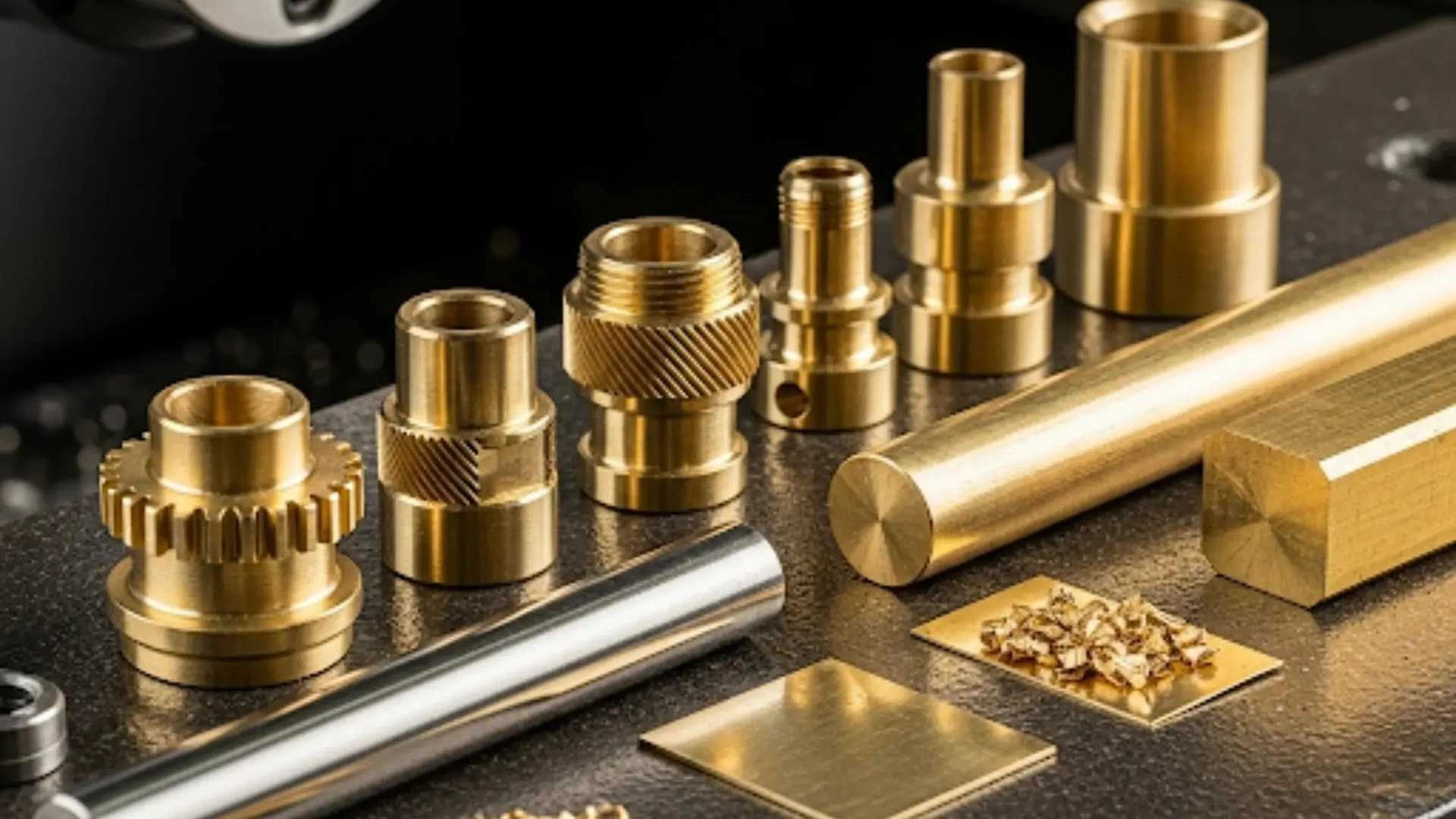
Brass is relatively easy to cut into shapes and produces parts with superb surface finishes. It is used for fittings, fasteners, and decorative components. Its good conductivity also makes it valuable in electrical connectors.
Titanium
Titanium is lightweight, extremely strong, and corrosion-resistant. It is extensively used in aerospace, medical implants, and energy equipment. CNC lathes take care of it, as it needs precision in speed and specialized tools to machine the titanium.
Plastics
Some plastics, such as nylon, PTFE, or acetal, are also effectively machined through CNC lathes. Plastics are used for lightweight components, electrical insulation, or for parts used under harsh conditions. Plastics are convenient when metals are too heavy or expensive.